Turn healthcare data into structured intelligence to optimize quality and financial performance.

Healthcare providers generate vast amounts of data, but much of it remains unstructured or locked in legacy formats. This creates care gaps, missed incentives, and unnecessary administrative burden.


Unstructured data are transformed into accurate, contextualized clinical codes to enable faster reimbursement, improved quality, and better patient care.




We use a combination of AI technologies known as GENIE (Graph Enabled Information Extraction) to handle even the most complex outpatient coding without hallucination.
We extract key information and map medical entities to nodes in our clinical knowledge graph, enabling accurate, contextualized SNOMED, ICD-10, and CPT coding.

Knowledge graphs and graph-based data representation enable clinical and business logic to calculate quality measures and identify care gaps in real time.
A robust structured data foundation powers next-generation analytics to help identify at-risk patient cohorts and enable early intervention.
Outputs are delivered to existing EHRs, applications and data lakes, enabling seamless integration with existing workflows.


We help payers, providers, and ACOs improve performance, reduce operational friction, and enhance patient care.

Track HEDIS, MIPS, eCQMs and custom quality measures using continuously updated clinical data.
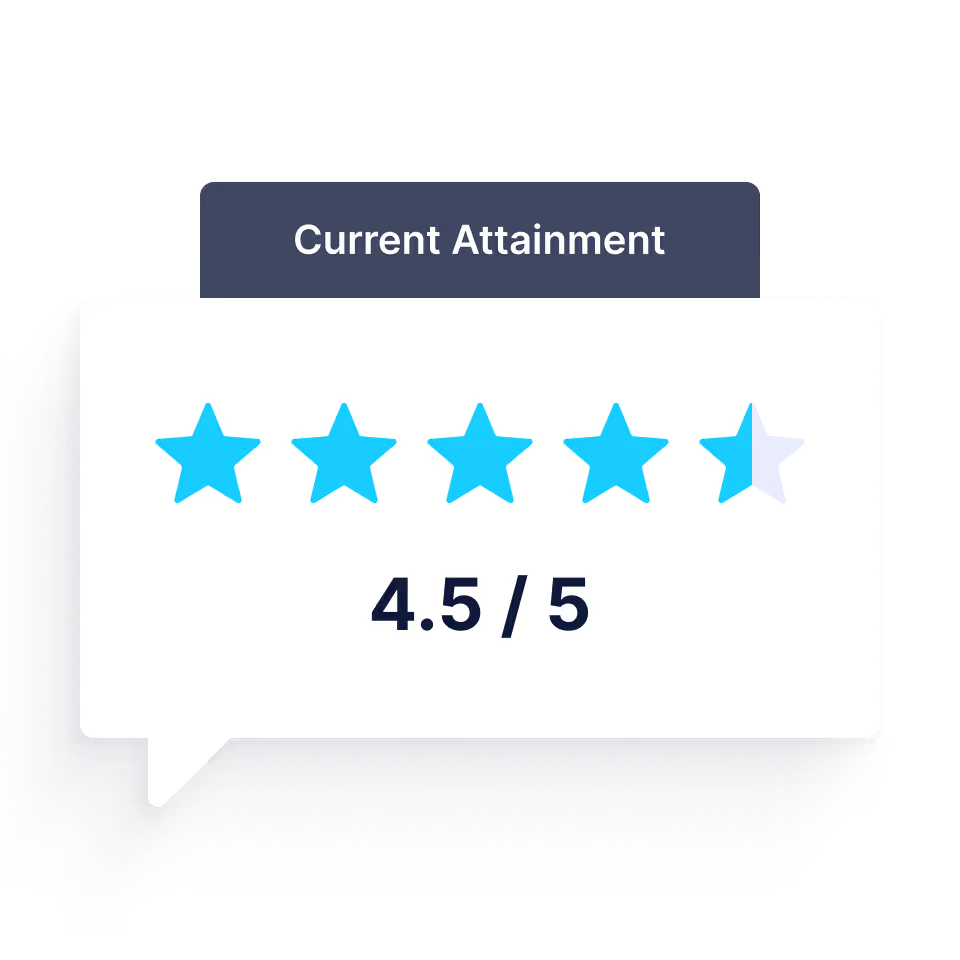
Improve Star Ratings and close quality gaps by capturing accurate, complete clinical data in real time.
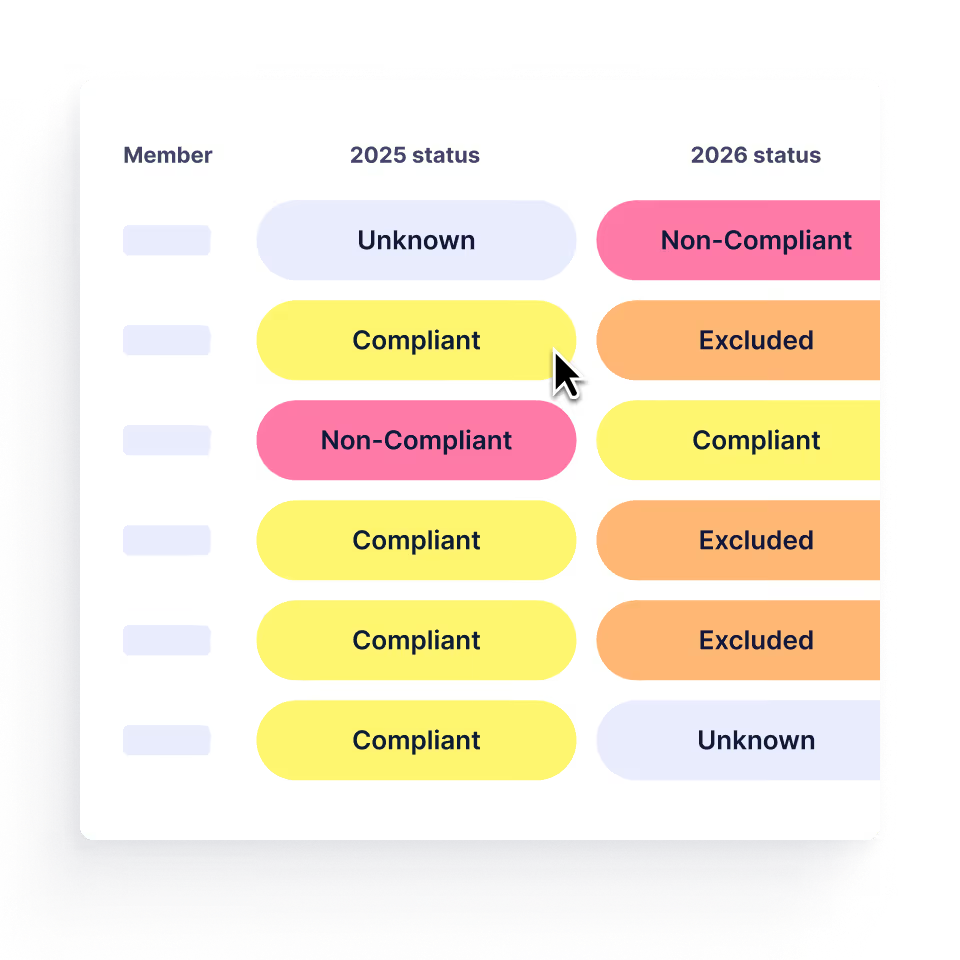
Identify and close coding, care and quality gaps using both structured and unstructured clinical data.
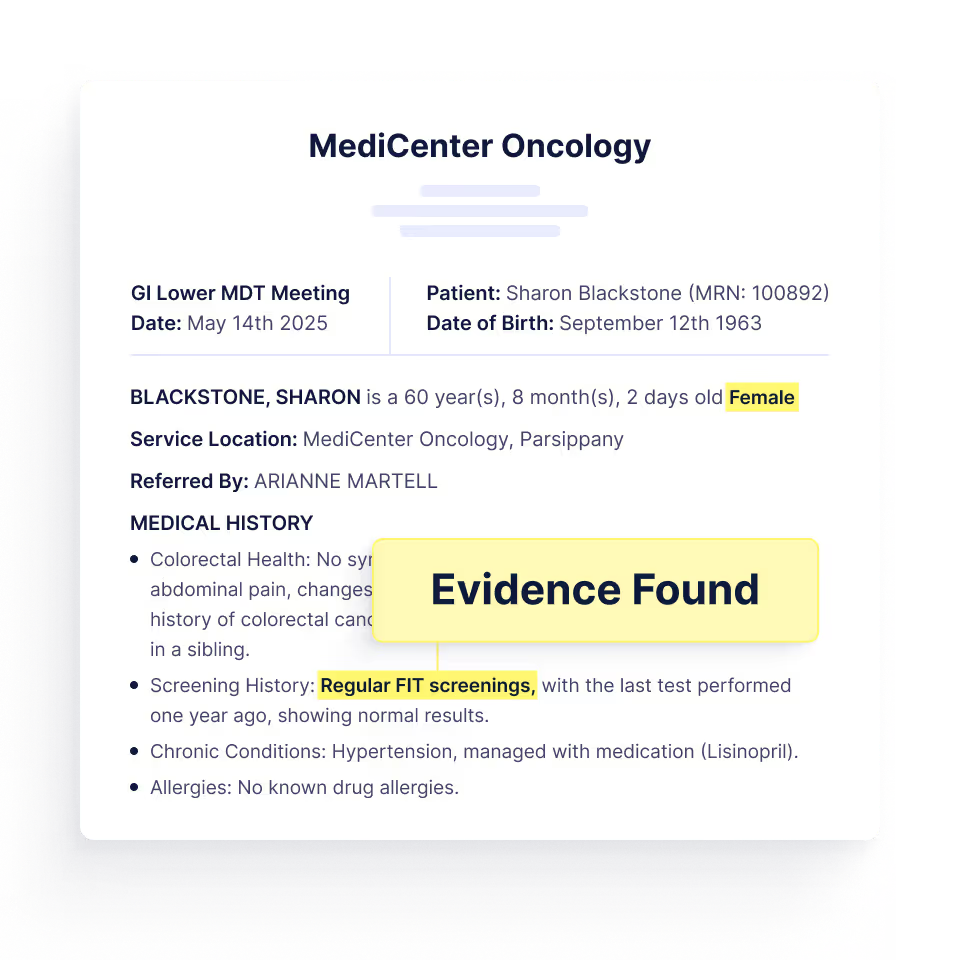
Ensure your data is structured, standardized, and ready for any regulatory requirement.
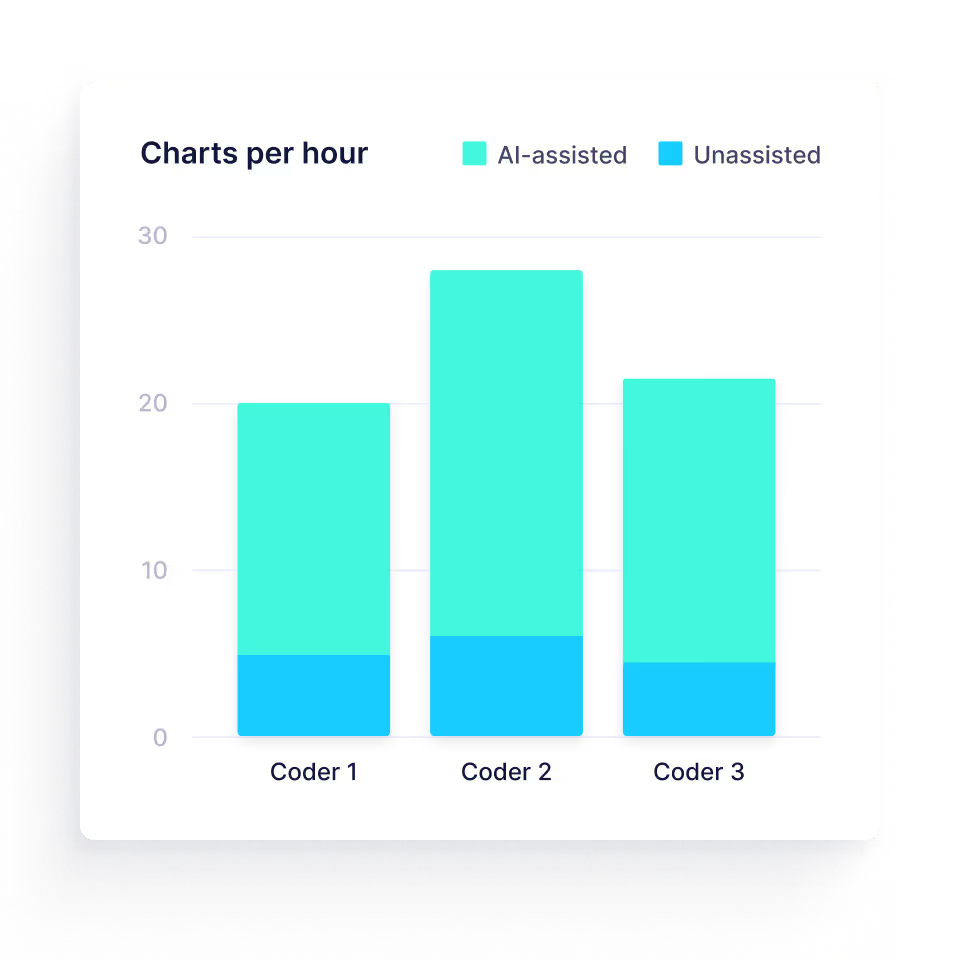
Increase coder throughput by dramatically reducing manual chart review.
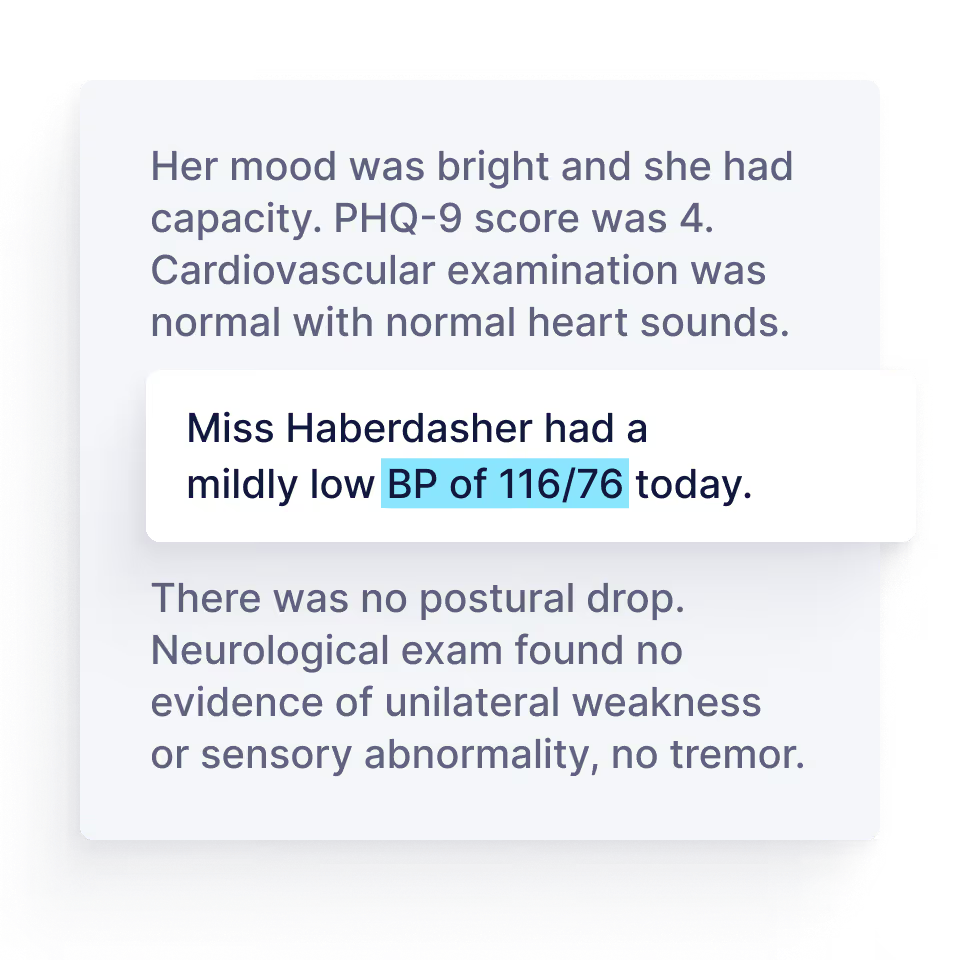
Strengthen clinical data integrity through accurate, consistent, and traceable clinical coding.
Dyad powers BetterLetter, an application used by hundreds of NHS primary care clinics to code and workflow millions of pieces of clinical correspondence per year

Having tested many clinical document solutions, BetterLetter is our platform of choice - the technology is excellent and we appreciate the team's understanding of healthcare and commitment to AI safety
Dr Vish Ratnasuriya
NHS Assembly & National Commission for the Regulation of AI in Healthcare



Dyad is fully compliant with relevant industry standards, supporting secure data handling, seamless workflows, and audit readiness.
Designed with appropriate safeguards for protecting health information under HIPAA.
.png)
Certified to have strong protections in place against common cyber attacks.